
Vanderburgh County Multi-Day Arrest Log
The county's official source is VCSO Recent Reports. The page offers an offense search plus date filtering. Each report row carries its type, location, occurred time, and reported time. Those dates drive the search itself. Treat it as a multi-day public-safety blotter, or as a way to spot an incident before requesting the full report.
It is not an arrest-name feed, though. Rows carry no name, booking charge, bond, released flag, or booking photograph. Some reported incidents end in an arrest. Others never do. An arrest can also land in the jail system with no blotter row a reader could match. So the two sources should never be mashed into one implied arrest list.
The span supports a weekly view. In one published stretch, the feed carried 91 reports dated September 1 through September 8, 2026. VCSO does not promise a fixed seven-day retention rule. The live source controls.
Read Vanderburgh County Blotter Entries
Start from the incident and work toward the right next record. Because a date search can pull events that occurred earlier but were reported later, always weigh both timestamps before drawing conclusions.
- Open VCSO Recent Reports and choose the relevant date or short range.
- Use the offense search when the report category is known.
- Compare the location, occurred time, reported time, and report type.
- Record the details needed to identify the incident in a formal request.
- If a person may have been booked, search VCSO Recent Booking Records and Inmate Lookup separately.
- Use Indiana MyCase for a public case and final disposition, not the incident feed.
Need a same-day named booking? The Daily Arrest Report is the better route. This multi-day page instead tracks report timing, agency boundaries, and the archive path once a row has rolled out of view.
Vanderburgh Arrest Log Fields Explained
The official multi-day data stays sparse by design. Reading each field with care keeps a reported event from turning into a claim about an arrest the record never made.
| Field | What it establishes |
|---|---|
| Report or offense type | The category assigned to the incident report, not a filed charge or conviction. |
| Location | The place tied to the reported event; it is not a person’s home address by default. |
| Occurred time | When the event was recorded as occurring. |
| Reported time | When the matter was reported or entered; it can differ from occurrence time. |
| Search date | The date value used by the interface to filter report rows. |
| Person, bond, photo | Not present in the observed report objects; check the separate booking source. |
A Vanderburgh County jail card tracks the booking itself: name, booking number, age, gender, booking time, bond, and release status. The incident log works differently. It lists calls and complaints, so it can't tell you who is still in custody, and a booking card can't fill in the story behind the arrest.
Vanderburgh Weekly Report Interface
The official VCSO report page offers offense and date controls. There is no photo gallery and no named booking list here.
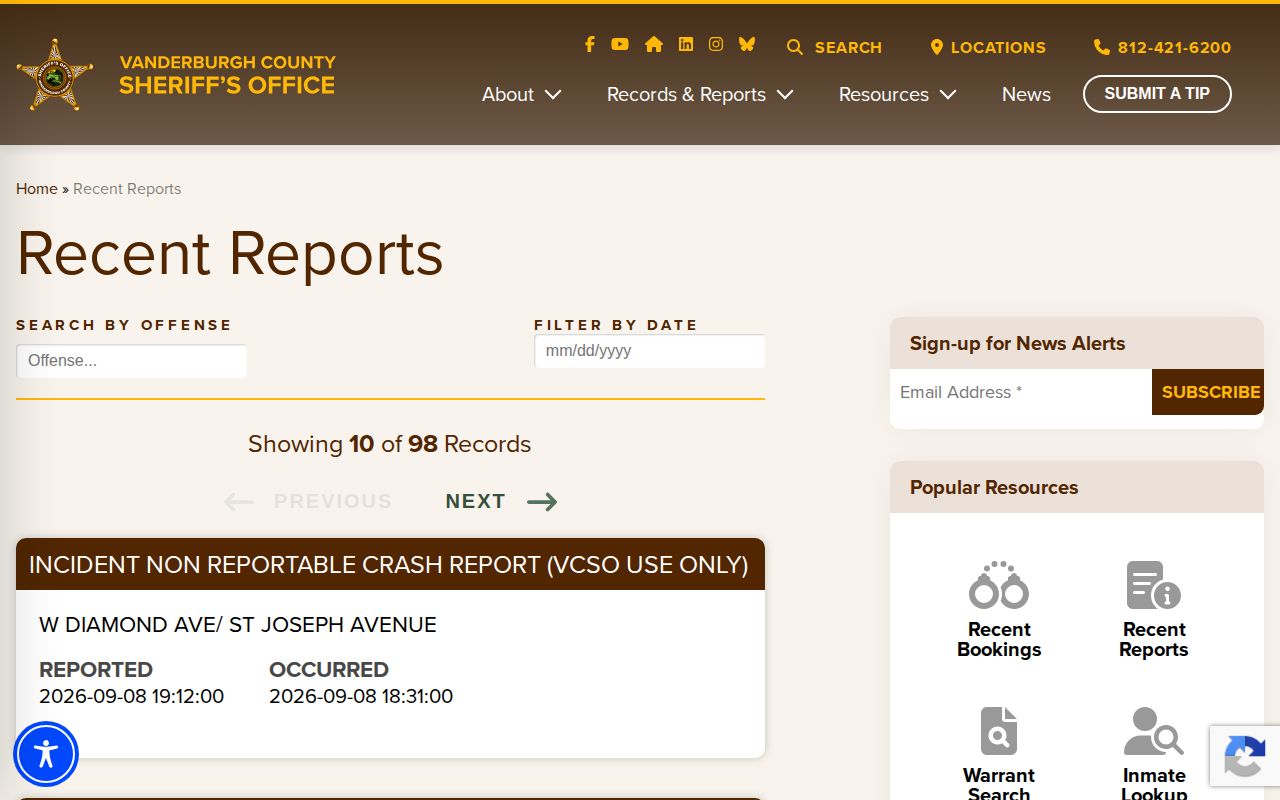
Rows shift constantly. New reports enter, and older ones leave the served window. The agency's own data feed, at official VCSO recent-reports data, shows why both timestamps matter so much.
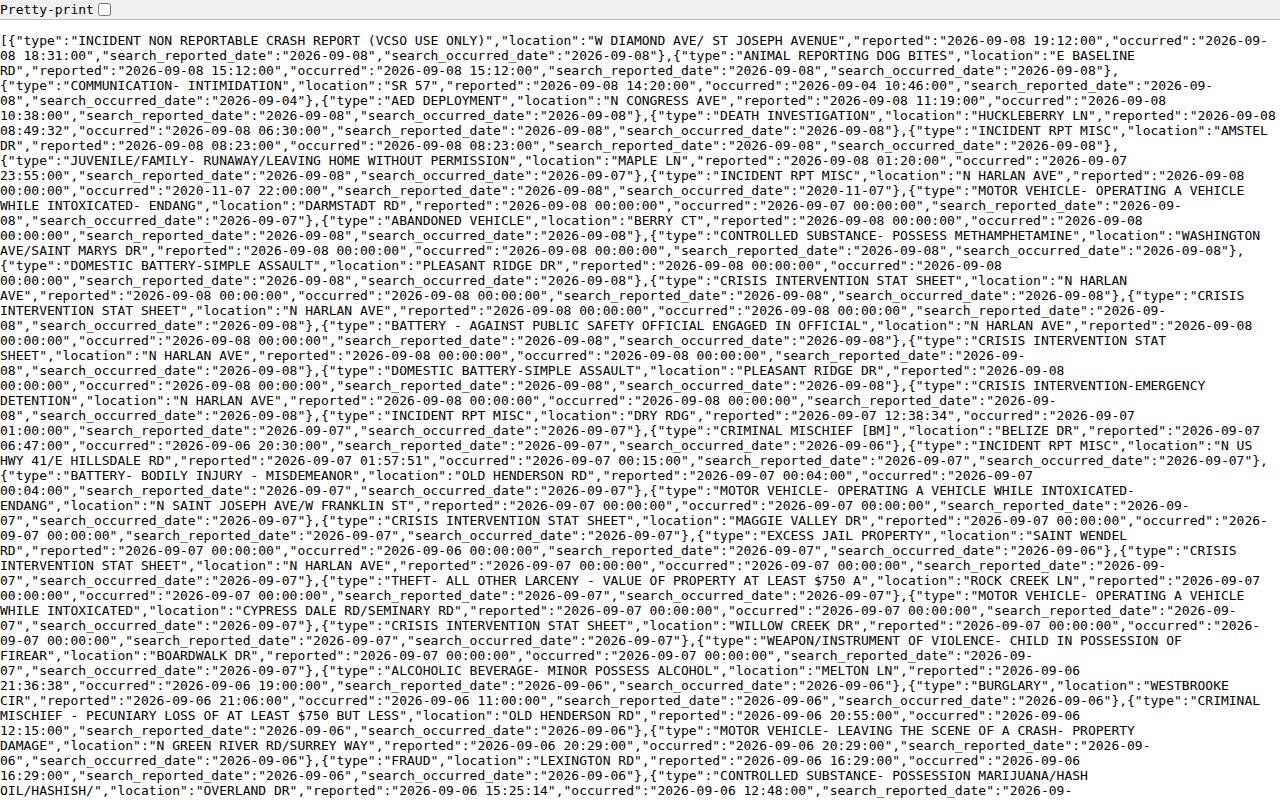
One span proves only one span. The number of days kept online can change at any time.
Vanderburgh Weekend Report Timing
VCSO publishes no formal weekend, holiday, or batch-posting schedule for Recent Reports. A weekend event may be reported at once. It may be entered days later. It may be updated as details reach the agency. So widen your search to nearby dates, and compare occurrence time against report time. A report date is also not necessarily a jail booking date.
A surge of rows does not prove a surge of arrests. The feed lists reported offenses, and plenty never lead to one. Real trend claims need a defined dataset and period, not a glance at one page.
Evansville Arrest Reports Use Two Systems
Evansville keeps its own records system. The Evansville Police Department publishes a Daily Crime Report and runs a Central Records Unit. When EPD handles an incident, the person may be booked at the county jail. The two records describe different stages. EPD is the source for its offense or supplementary report. VCSO is the source for county booking and custody. The department's crime-analysis materials link to the municipal report interface. It is not a county mugshot feed.
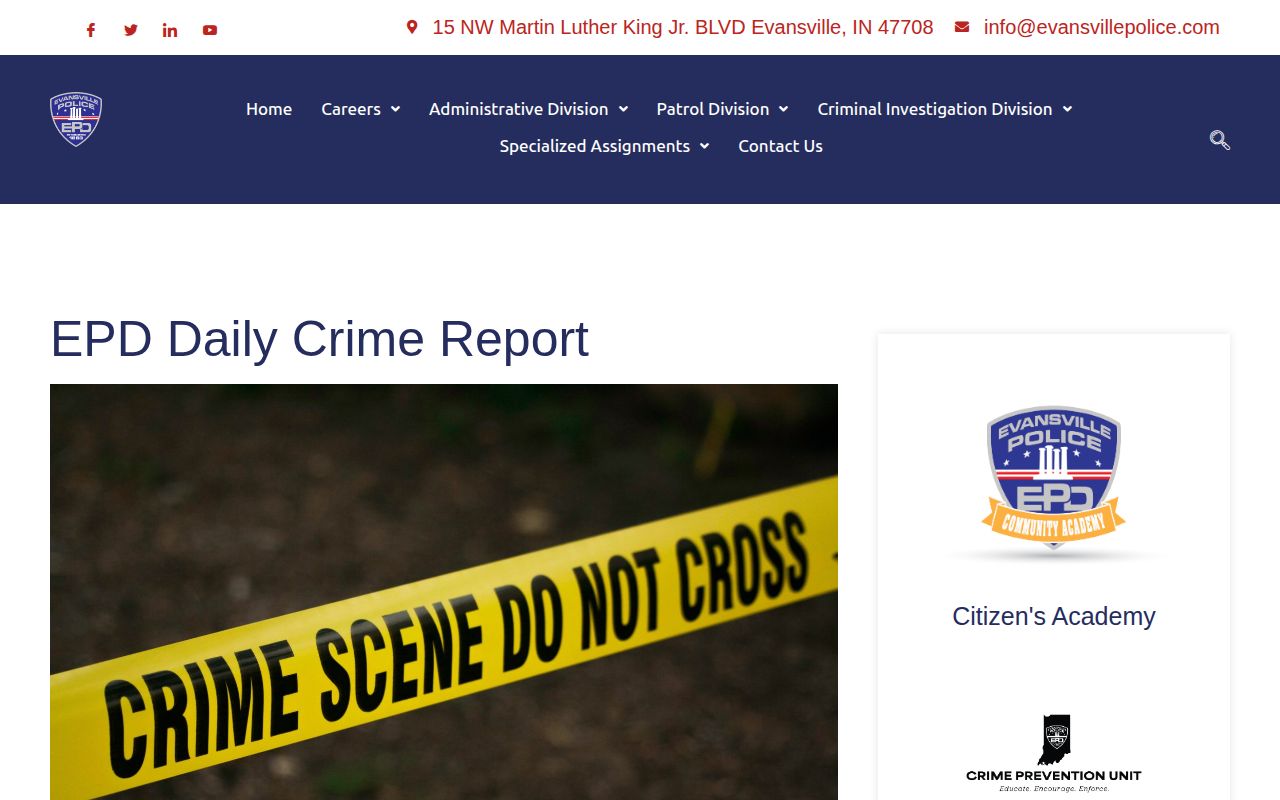
Matching an EPD incident to a VCSO booking takes dates, agency details, and identifiers. Location alone will not do it. EPD Central Records sits in Room 126, Police Headquarters, 15 N.W. Martin Luther King Jr. Boulevard, Evansville. Its records phone is (812) 436-7956. Lobby hours run Monday through Friday, 7:00 a.m. to 4:30 p.m., closed weekends and holidays, and fees should be confirmed before ordering.
Older Vanderburgh Arrest Report Requests
A Vanderburgh arrest entry does not stay online forever. VCSO makes no fixed promise about how long each Recent Reports row remains visible. Once an event rolls off, file through the VCSO Incident Report Request. That form wants your details, victim status, the incident number if you have it, the location, the date, a short description, and how you want delivery handled.
Fees are modest. Five pages or fewer normally cost nothing. Longer reports run 50 cents apiece once they pass five pages, and anything over ten pages costs a dollar plus ten cents per page after that. Check with the records office for the current total. An incarceration-record request is a separate product. It usually returns only the dates a person was lodged, not charges or case outcomes.
Indiana's IARA public-safety schedule sets retention for record series. Daily bulletins are kept one year. Certain police reports and case files are kept three years after final disposition. Other criminal case categories run longer. The schedule does not set a lifespan for online booking photographs or this live blotter. Ask the custodian which series applies, and if records were transferred, request the accession details from IARA County/Local Records Management.
Vanderburgh Arrest News Is Secondary
Start with official sources for Vanderburgh arrest information. The Courier & Press crime archive and 14 News both run event-driven Evansville stories. These are often built from police reports, affidavits, court filings, or jail material. Neither promises a complete daily roster. Stories also get updated as new documents arrive.
Sites like RecentlyBooked, Busted Newspaper, Arrests.org, and Mugshots.com are unofficial copies. Their dates, fields, images, and update pace can all differ from VCSO. They should never override an official correction, a release status, or a court result. Black Book Online is also secondary. It is an index to Indiana incident-log sources rather than the originating record. No third-party result deserves to be treated as authoritative.
VCSO News remains the strongest official narrative source for selected major arrests and wanted-subject releases. It is event-driven, not complete. For the full chain, work in order. Start with the agency incident report. Then come the jail booking record and the current roster. The court disposition comes last.
Vanderburgh Arrest Allegations Need Disposition
An offense report and a booking record answer different questions in Vanderburgh County. The first documents a complaint or an investigation. The second reflects a jail intake. Charges can still shift afterward, since prosecutors may decline, amend, reduce, or dismiss them. Indiana MyCase shows public filings and outcomes, though it skips confidential, sealed, and expunged matters. The Clerk holds the official court file. Match more than a shared name before drawing conclusions.
Public Record Search
Sponsored Results